
Keeping a home clean, organized, comfortable, and functional can sometimes feel like a full-time job. From managing clutter and cleaning different surfaces to organizing small spaces and saving time on everyday tasks, there is always something that needs attention. Fortunately, you do not need expensive products or complicated systems to make your home easier to manage.
Simple household habits and practical shortcuts can make everyday chores more efficient. This is where home hacks wutawhacks can provide inspiration for people looking for straightforward ideas to improve their living space.
Whether you live in a small apartment, a busy family home, or a larger house, the right home hacks can help you save time, use available space more effectively, and keep everyday tasks under control.
What Are Home Hacks Wutawhacks?
The phrase home hacks wutawhacks can be used to describe simple tricks, ideas, and practical solutions for common household challenges.
A good home hack does not necessarily require buying something new. Often, the most useful solutions involve changing how you organize, clean, store, or approach a task.
The best hacks should also be safe and practical. Before trying any cleaning or maintenance trick, check that it is suitable for the specific material or surface.
1. Declutter One Small Area at a Time
Decluttering an entire house in one day can quickly become overwhelming.
Instead, choose one small area.
You could start with:
- One kitchen drawer
- A bathroom cabinet
- A bedside table
- One shelf
- A section of your wardrobe
- A desk drawer
Remove everything from the area and separate the items into categories such as keep, donate, recycle, and discard.
Once you finish one small space, move to another.
This approach makes organization feel more manageable and helps prevent the process from becoming exhausting.
2. Give Everything a Regular Home
One of the simplest organization tricks is making sure commonly used items have a designated place.
Keys can go in one bowl or hook area. Shoes can have a specific storage space. Cleaning supplies can stay together. Important documents can be kept in labeled folders.
When every item has a place, putting things away becomes easier.
It also reduces the time you spend searching for items.
If several people share your home, clearly labeled storage can make it easier for everyone to follow the same system.
3. Use Vertical Space
When floor space is limited, look upward.
Walls, doors, and the inside of cabinets can provide useful storage opportunities.
Depending on the room, you might use:
- Wall-mounted shelves
- Hooks
- Pegboards
- Over-door organizers
- Hanging baskets
- Cabinet organizers
For example, a small kitchen may benefit from wall-mounted storage for frequently used utensils.
In a bathroom, appropriate organizers can help keep everyday toiletries accessible without taking up valuable counter space.
Always ensure that wall-mounted storage is installed securely and is suitable for the weight being stored.
4. Keep Cleaning Supplies Organized
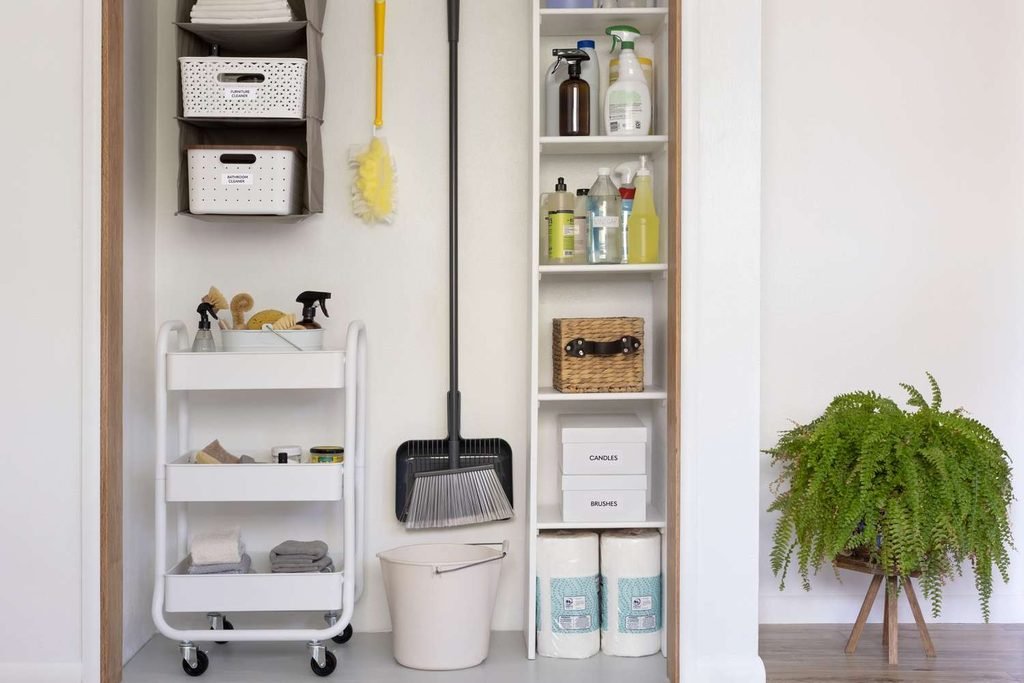
Cleaning becomes easier when supplies are easy to find.
Instead of keeping products scattered throughout different rooms, create a sensible storage system.
You might group cleaning supplies in a designated cabinet, basket, or caddy.
A portable cleaning caddy can be useful if you regularly clean multiple rooms.
Keep cleaning products in their original containers whenever possible and follow the manufacturer’s storage instructions.
Most importantly, never mix cleaning chemicals unless the product instructions specifically say that it is safe. Some combinations can produce dangerous gases.
5. Create a Quick Daily Cleaning Routine
You do not always need a major cleaning session.
A few minutes of daily maintenance can prevent small messes from becoming large ones.
Try a simple routine:
- Put away items that are out of place.
- Wipe frequently used surfaces.
- Wash or load dishes.
- Deal with obvious trash.
- Quickly check the bathroom.
- Prepare the main living area for the next day.
The exact routine can vary depending on your home.
The goal is to maintain basic order rather than make your home look perfect every day.
6. Make the Kitchen Easier to Use
A well-organized kitchen can save considerable time.
Keep frequently used ingredients and tools within easy reach.
Group similar items together. For example, baking ingredients can have one storage area, while everyday cooking utensils can be stored near the main preparation space.
Use clear labels where useful.
You can also arrange your refrigerator so foods are easy to see. Items that need to be used soon can be placed where they are more noticeable.
This can help reduce food waste.
7. Use Food Before It Goes to Waste
Food waste can often be reduced with better planning.
Before going grocery shopping, check your refrigerator, freezer, and pantry.
Make a short list based on what you already have.
Plan meals around ingredients that need to be used soon.
For example, vegetables approaching the end of their freshness can often be incorporated into soups, stir-fries, omelets, or other cooked dishes, depending on their condition.
Store food appropriately and follow food-safety guidance.
When something has spoiled, do not try to save it simply to avoid waste.
8. Organize Your Refrigerator
A refrigerator can become cluttered quickly.
Keep similar foods together and avoid overpacking shelves.
Use suitable containers to organize leftovers and label them with dates when helpful.
Cleaning small spills immediately can also make refrigerator maintenance easier.
Regularly check expiration and use-by information, while remembering that food-date labeling can vary by country and product.
If you are unsure whether food is safe, follow local food-safety guidance rather than relying only on appearance or smell.
9. Make Laundry More Efficient
Laundry can become easier with a consistent system.
Sort clothing according to the care instructions on the labels rather than relying on color alone.
Create separate baskets if that makes sorting easier.
Keep commonly used laundry supplies together.
Avoid overloading your washing machine because clothing needs enough room for proper washing.
Following the manufacturer’s instructions for detergent and washing cycles can also help protect clothing and the machine.
For delicate items, always check their care labels.
10. Keep Closets Under Control
Closets often become storage areas for things you rarely use.
Every few months, review your clothing and belongings.
Ask yourself whether each item is useful, regularly worn, or genuinely meaningful.
Store seasonal items separately when practical.
Use appropriate organizers for small accessories such as scarves, belts, or bags.
Do not overfill shelves or hanging areas. A little empty space makes it easier to see and access what you actually own.
11. Use a “Reset Basket”
A simple basket can become a useful organization tool.
Keep an empty basket in a central location. When you find items that belong in another room, place them in the basket rather than interrupting your current task.
At the end of the day, return everything to its proper location.
This prevents constant movement between rooms while cleaning.
It can be particularly useful in larger homes or households with children.
12. Make the Entryway Functional
The entrance to your home can quickly become cluttered.
Create dedicated spaces for everyday items such as shoes, keys, bags, umbrellas, and jackets.
Hooks can be useful for frequently worn outerwear.
A shoe rack or designated shoe area can prevent footwear from spreading throughout the home.
A small tray near the entrance can provide a consistent place for keys and other small items.
The goal is to make leaving and entering the home easier.
13. Create a Paperwork System
Important documents can be difficult to find when they are stored randomly.
Use folders for categories such as:
- Household documents
- Financial records
- Medical information
- Insurance
- Education
- Property or rental documents
For digital documents, use clearly named folders and maintain secure backups where appropriate.
Do not keep sensitive information in easily accessible places.
Review paperwork periodically and securely dispose of documents you no longer need.
14. Make Your Bedroom More Relaxing
Your bedroom should support rest.
Try to keep unnecessary clutter away from the bed area.
Choose comfortable bedding and maintain a temperature that works for you.
Reduce unnecessary light and noise where possible.
Keeping work-related materials out of the sleeping area can also help create a stronger distinction between work and rest.
Small environmental changes can make the room feel calmer without requiring expensive renovations.
15. Keep Bathrooms Simple and Clean
Bathrooms require regular cleaning because moisture can contribute to unpleasant odors and microbial growth.
Wipe frequently used surfaces regularly and keep the area well ventilated.
Allow wet towels to dry properly rather than leaving them bunched up.
Clean the shower, sink, toilet, and floor according to the materials and products involved.
If you notice persistent mold or water damage, address the underlying moisture problem rather than simply cleaning the visible area.
For significant water damage or persistent mold problems, professional assistance may be appropriate.
16. Use Labels to Save Time
Labels can make shared household systems much easier.
Label storage bins, pantry containers, files, or shelves.
This is especially useful when several people use the same space.
Labels also make it easier to return items to their correct locations.
Keep labels simple and easy to understand.
17. Create a Home Maintenance Calendar
Cleaning is not the only household responsibility.
Homes also need regular maintenance.
Create a simple calendar for tasks such as:
- Replacing filters
- Checking smoke or carbon monoxide alarms where applicable
- Cleaning appliances
- Inspecting plumbing for obvious leaks
- Checking batteries
- Reviewing emergency supplies
- Scheduling professional maintenance
The exact requirements depend on your home and equipment.
Follow manufacturer instructions for appliances and safety devices.
18. Keep an Emergency Kit
Every household should consider basic emergency preparedness.
Depending on your circumstances, an emergency kit might include:
- First-aid supplies
- Flashlight
- Extra batteries
- Essential medications
- Drinking water
- Basic nonperishable food
- Important contact information
- Copies of important documents
The contents should reflect local risks and household needs.
Check supplies periodically and replace expired or damaged items.
19. Make Your Home More Energy Efficient
Small changes can sometimes reduce unnecessary energy use.
Turn off lights when they are not needed.
Use energy-efficient lighting where appropriate.
Avoid leaving electronics running unnecessarily.
Keep doors and windows properly sealed if possible.
Follow manufacturer instructions for heating and cooling equipment and maintain systems regularly.
Energy-saving habits can also make household routines more conscious and organized.
20. Teach the Whole Family to Help
Keeping a home organized should not necessarily be the responsibility of one person.
Assign age-appropriate tasks to family members.
Children can help put away toys, organize books, place laundry in baskets, or assist with simple household activities.
Adults can share cooking, cleaning, shopping, and maintenance responsibilities.
A shared approach can make household management more sustainable.
Common Home Hack Mistakes to Avoid
Not every viral home hack is safe or effective.
Be particularly careful with tricks involving chemicals, electrical systems, plumbing, food safety, or structural repairs.
Avoid mixing household cleaning products unless their labels specifically indicate compatibility.
Do not use a DIY solution on expensive materials without checking whether it could cause damage.
Similarly, electrical or structural work should generally be handled by qualified professionals when you do not have the appropriate skills.
A home hack should save you time without creating a bigger problem.
Quick Home Hacks Wutawhacks to Try Today
If you want to make your home easier to manage, start with a few simple actions:
- Declutter one drawer.
- Create a designated place for keys.
- Organize one refrigerator shelf.
- Put frequently used items within easy reach.
- Prepare tomorrow’s clothes tonight.
- Create a small cleaning caddy.
- Label an important storage area.
- Make a short weekly cleaning schedule.
- Review your emergency supplies.
- Give every family member one manageable household responsibility.
These small changes may seem insignificant individually, but together they can make everyday household tasks feel more organized.
Frequently Asked Questions
What are home hacks wutawhacks?
Home hacks wutawhacks can refer to practical household tips and shortcuts designed to make cleaning, organizing, storage, maintenance, and everyday home management easier.
Are home hacks always safe?
No. Some online home hacks can be unsafe or damaging. Be especially careful with chemicals, electricity, food storage, plumbing, and structural repairs. Always check manufacturer instructions and use appropriate safety precautions.
How can I organize a small home?
Use vertical storage, hooks, labeled containers, multifunctional furniture, and regular decluttering. Keeping frequently used items accessible while storing less-used belongings efficiently can make a small space easier to manage.
How can I keep my house clean with a busy schedule?
Break cleaning into short daily tasks instead of waiting for a large cleaning day. Focus on high-use areas and involve other household members when possible.
What is the easiest home hack to start with?
Start by giving commonly used items a designated place. When everything has a home, putting things away and finding them later becomes much easier.
Conclusion
A well-managed home does not need to be perfectly clean or beautifully decorated at all times. What matters most is creating systems that make everyday life easier.
The most practical home hacks wutawhacks focus on simple organization, efficient cleaning, smart storage, meal planning, household safety, and shared responsibilities. You do not need to implement every idea at once.
Choose one small area, improve one routine, and gradually build a system that works for your household.
The best home hack is ultimately one that is simple, safe, practical, and easy enough to keep using.